Monday, 18 January 2016

Artist research - Suture Blue

Suture Blue - http://sutureblue.tumblr.com/


I found this person online and thought that they represented the human condition in a way. The rotoscoping of people combined with glitchy abstract footage represents something beyond the physical realm, something in our subconscious; Dreams, imagination, our perceived surroundings.

There’s a void of me.Fuck that.My friend, where do you think you are going?bzzrk X sutureblue

Thursday, 17 December 2015

Rage comic faces

Rage Comics were popular on the internet a few years ago. They are considered a 'meme'; an image or series of images which are shared widely on the internet and then manipulated by others. This repeats over- morphing, evolving and constantly generating more memes and funny pictures for people to share.

These 'rage comics' tend to have been drawn hastily on microsoft paint and all have a similar but not identical visual theme. Rage comics express extreme emotions that we all experience but struggle to actually express because they are so extreme. Take a minute to look at a few of these expressions, I'm sure you can empathise with how each of them feel even though their features are over exaggerated to the point of abstraction.


I used charcoal to sketch these 'rage faces' down. I chose charcoal because it's fast for getting your ideas down and the lines are nice and thick. If I was going to develop these (which I might) I would probably use a printing technique. I could use mono or lino printing but Greg has recommended screen printing them or maybe even animating them (inspired by Jeff Scher).

Screen prints are wonderfully flat and look almost digital. I could try using a bamboo ink pen or a nice long-haired brush and a pot of black sign painter's one shot.
Each of these three materials get a great hard-edged, opaque black line but each would come out differently.

If I did an animation I think that I'd use Microsoft Paint like the originals to make each frame, one by one.

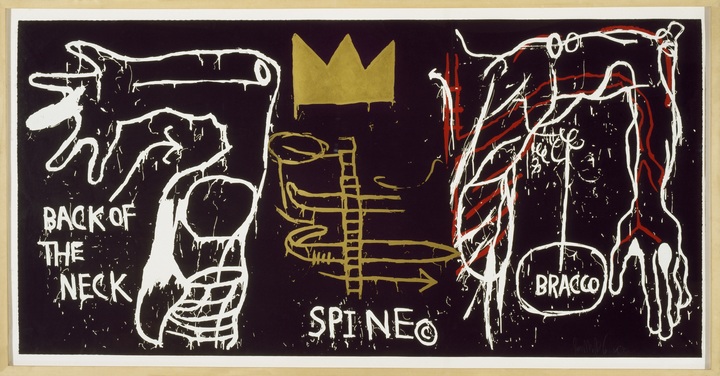
Here are a few examples of screen printing they are by: Shepard Fairey, Andy Warhol and Jean Michael Basquiat. 


Tuesday, 15 December 2015

Artist Research: Jan Švankmajer


Darkness Light Darkness (1990) by Jan Svankmajer (mp4 360p) from Ron Schijfs on Vimeo.


Švankmajer has gained a reputation over several decades for his distinctive use of stop-motion technique, and his ability to make surreal, nightmarish, and yet somehow funny pictures. He continues to make films in Prague.
Švankmajer's trademarks include very exaggerated sounds, often creating a very strange effect in all eating scenes. He often uses fast-motion sequences when people walk or interact. His movies often involve inanimate objects being brought to life through stop-motion. Many of his films also include clay objects in stop-motion, otherwise known as claymation. Food is a favourite subject and medium. Švankmajer also uses pixilation in many of his films, including Food (1992) andConspirators of Pleasure (1996).
Stop-motion features in most of his work, though recently his feature films have included much more live action sequences than animation.
Many of his movies, like the short film Down to the Cellar, are made from a child's perspective, while at the same time often having a truly disturbing and even aggressive nature. In 1972 the communist authorities banned him from making films, and many of his later films were suppressed. He was almost unknown in the West until the early 1980s. Writing in The New York Times, Andrew Johnston praised Svankmajer's artistry, stating "while his films are rife with cultural and scientific allusions, his unusual imagery possesses an accessibility that feels anchored in the shared language of the subconscious, making his films equally rewarding to the culturally hyperliterate and to those who simply enjoy visual stimulation."[3]
Jan Svankmajer - Passionate Dialogue from xenatunda on Vimeo.

Wednesday, 25 November 2015

Human condition visual research

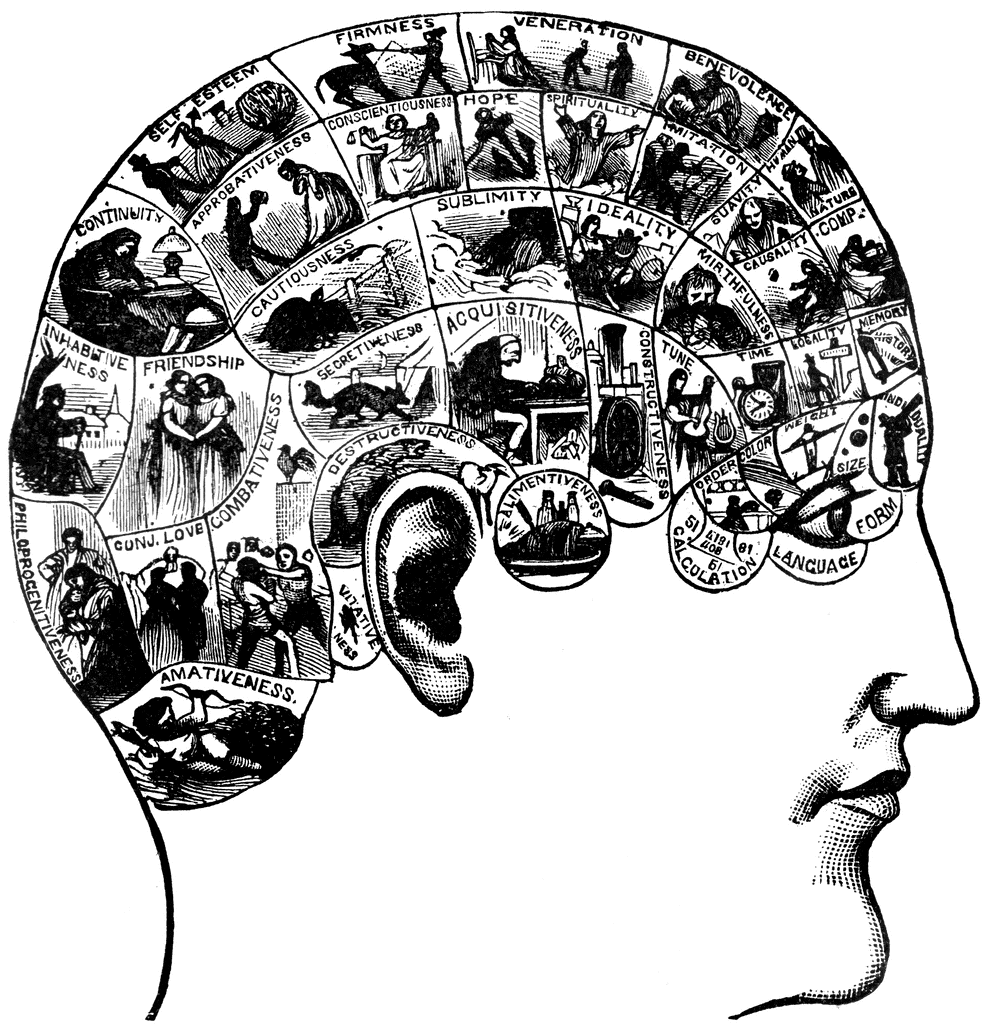
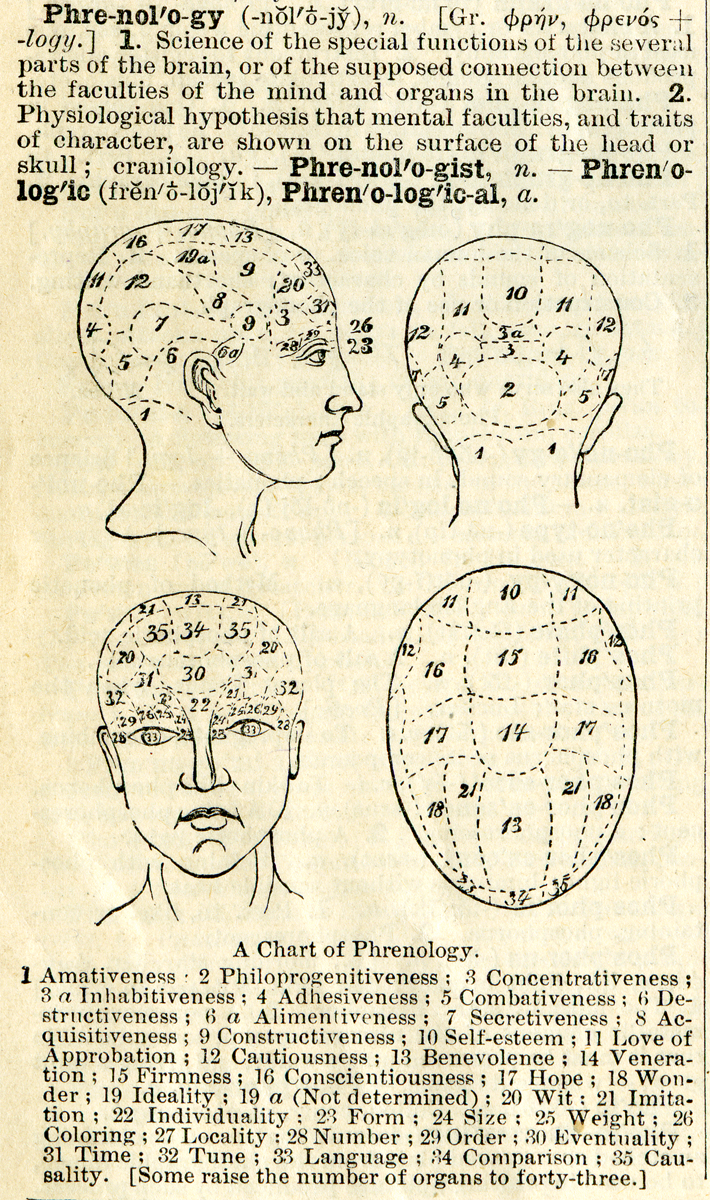
PHRENOLOGY


robert plutchik's wheel of emotions
https://en.wikipedia.org/wiki/Robert_Plutchik


 Natural chemicals of mood.

LEVELS OF CONSIOUSNESS
https://en.wikipedia.org/wiki/Level_of_consciousness_(Esotericism)
People make these graphs of enlightenment and it's colour and form type. These things seem like a hilarious mash of microsoft excel and new-agey mysticism. Also why do these usually look so bad!?


Eight-circuit model of consciousness


A humurous take on 'Maslow's Hierarchy Of Needs' and a biting commentary on modern society.

Monday, 2 November 2015

Telephone switchboards


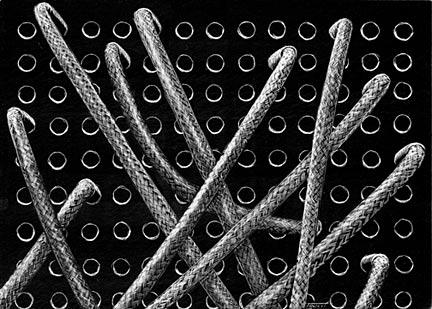
I will use coloured cables because I feel that they have potential to convey meaning.

"

Thalamus


the brain's sensory switchboard, located on top of the brainstem; it directs messages to the sensory receiving areas in the cortex and transmits replies to the cerebellum and medulla"


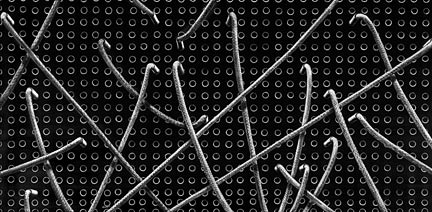
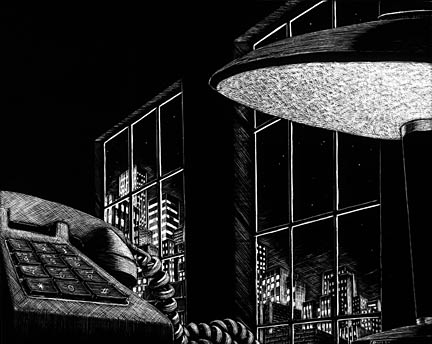
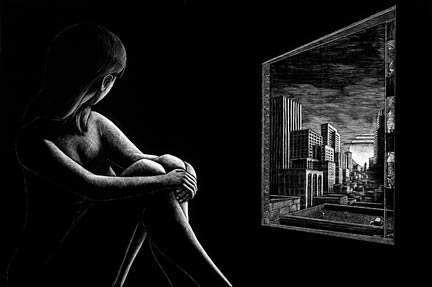
"Robert Berman Gallery presents a solo art exhibition from David Trulli titled “All Lines Are Busy,” a collection of new work that explores modern human networks and our ability to disconnect from them. 

“Since the invention of the telephone we have become more and more inter-connected” says Trulli, “somehow, though, we still manage to find our own separate places, real or imagined.”David Trulli works in scratchboard: a white clay-coated board, covered with black ink.  Fine knives are used to delicately scrape the ink away, creating the image.

Whether by phone, computer or mere proximity, we are more interconnected than at any time in history.  We exist in, and are surrounded by, invisible networks.  Sooner or later, though, most of us would like to “disconnect” even if just for a little while.
It may not be possible to sever the links, but is it really necessary?  There are so many connections, and with them so high a noise level, that maybe we can still find cover and comfort in spite of it all.
We are at once connected and disconnected, exposed and hidden.  It is just one paradox of our modern lives.
-David Trulli

...

“All Lines Are Busy,” refers to the broadly understood irony of ubiquitous communication technology’s impact on society. We are both more connected and more isolated than ever, increasingly relying on mediated perceptions of the world as we voraciously devour information via the internet and cable news at the expense of real human contact. Trulli observes that “the people in most of the works seem to exist in a sort of fragile sanctuary; private places where the real world is very close at hand and always on the verge of intruding.” What is less immediately clear is whether they are in that limbo by choice, circumstance or the requirements of poetry.

Excellence is not nearly as interesting to Trulli as authenticity, and in the end the harmonious dissonance of his images buzzes and hums like the city itself. "


'Churchill war rooms museum' This turned up when I searched for 'War room world map'


- post more world map inspirations later
- post Langlands & bell
- Think about audiences