Wednesday, 25 November 2015

Human condition visual research

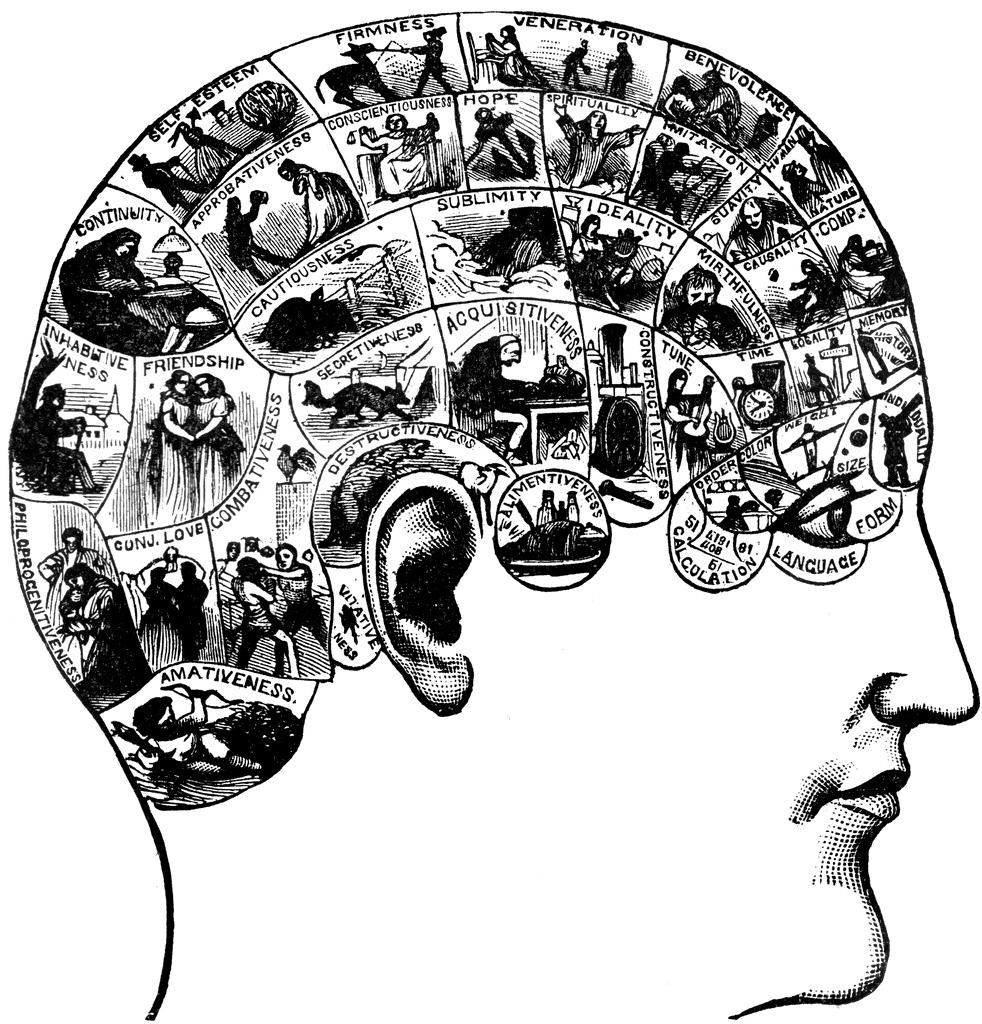
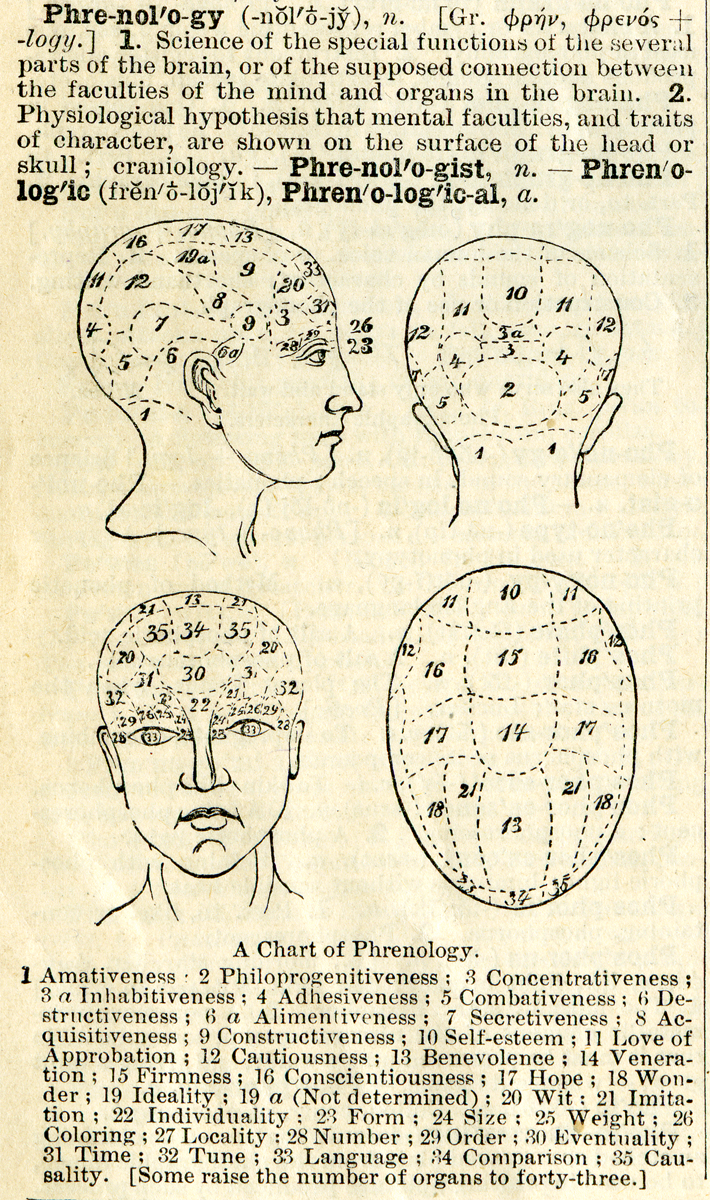
PHRENOLOGY


robert plutchik's wheel of emotions
https://en.wikipedia.org/wiki/Robert_Plutchik


 Natural chemicals of mood.

LEVELS OF CONSIOUSNESS
https://en.wikipedia.org/wiki/Level_of_consciousness_(Esotericism)
People make these graphs of enlightenment and it's colour and form type. These things seem like a hilarious mash of microsoft excel and new-agey mysticism. Also why do these usually look so bad!?


Eight-circuit model of consciousness


A humurous take on 'Maslow's Hierarchy Of Needs' and a biting commentary on modern society.

Monday, 2 November 2015

Telephone switchboards


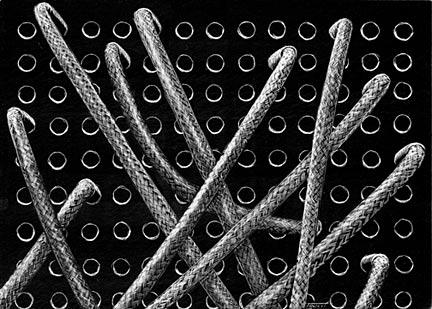
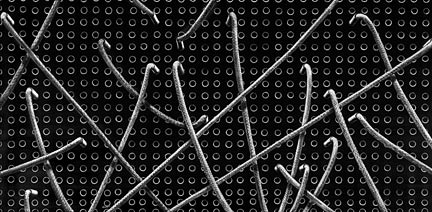
I will use coloured cables because I feel that they have potential to convey meaning.

"

Thalamus


the brain's sensory switchboard, located on top of the brainstem; it directs messages to the sensory receiving areas in the cortex and transmits replies to the cerebellum and medulla"


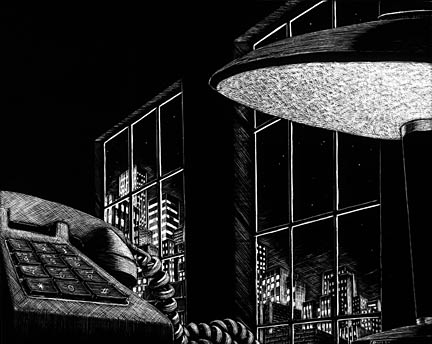
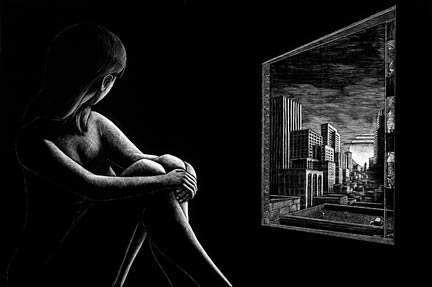
"Robert Berman Gallery presents a solo art exhibition from David Trulli titled “All Lines Are Busy,” a collection of new work that explores modern human networks and our ability to disconnect from them. 

“Since the invention of the telephone we have become more and more inter-connected” says Trulli, “somehow, though, we still manage to find our own separate places, real or imagined.”David Trulli works in scratchboard: a white clay-coated board, covered with black ink.  Fine knives are used to delicately scrape the ink away, creating the image.

Whether by phone, computer or mere proximity, we are more interconnected than at any time in history.  We exist in, and are surrounded by, invisible networks.  Sooner or later, though, most of us would like to “disconnect” even if just for a little while.
It may not be possible to sever the links, but is it really necessary?  There are so many connections, and with them so high a noise level, that maybe we can still find cover and comfort in spite of it all.
We are at once connected and disconnected, exposed and hidden.  It is just one paradox of our modern lives.
-David Trulli

...

" “All Lines Are Busy,” refers to the broadly understood irony of ubiquitous communication technology’s impact on society. We are both more connected and more isolated than ever, increasingly relying on mediated perceptions of the world as we voraciously devour information via the internet and cable news at the expense of real human contact. Trulli observes that “the people in most of the works seem to exist in a sort of fragile sanctuary; private places where the real world is very close at hand and always on the verge of intruding.” What is less immediately clear is whether they are in that limbo by choice, circumstance or the requirements of poetry.

Excellence is not nearly as interesting to Trulli as authenticity, and in the end the harmonious dissonance of his images buzzes and hums like the city itself. "


'Churchill war rooms museum' This turned up when I searched for 'War room world map'


- post more world map inspirations later
- post Langlands & bell
- Think about audiences

Thursday, 1 October 2015

I wanted to build something that span and lit up so I took a few small electrical components and things from my bedroom then constructed this simple circuit in class. First I used a computer fan.


Monday, 28 September 2015

Liliane Lijn

'Fire Ice Poemcon' 2007
'Dark matter Poem drum' 2011

Liliane Lijn is an american born artist who has lived in London since 1966. She was born in 1939. Her parents were jewish-russian and they talked six different languages in their household in Manhattan. This is what she says gave her such an interest in the meaning or loss of meaning in words.

I really recommend reading this interview with Lijn back in 2014. It is very insightful and I found out things I did not know from wikipedia.

A lot of her Pieces also seem to be based around cones and cylinders which is interesting to me because their main surface is wrapped all the way around rather than a top-down circle which simply isn't as exciting.

Faster than birds Poemdrum

Her Poem drums are one of her most famous series which experiment with words and light interacting in a cylindrical fashion. The drums are rotated using motors in their bases. It is this spinning movement that not only adds a dimension of time but reveals hidden depths when the viewer steps up close and peers through the blurred moving letters to discover their reverse on the other side. To me, this feels like a fantastic visual representation of 'reading between the words' in a poem.

In the interview mentioned earlier, Liliane has this to say about the poemdrums: "It started because I had been going to the Science Museum in Paris and I saw a beautiful experiment, which was an experiment in light interference, and I tried to do something similar. I managed to create interference using just lines on cylinders that rotated at a certain speed. And what you’d see, although these lines were black and white, was colour – you’d get colour coming out of it. And then, from that, I thought: “Well, words are made up of letters, and letters are made up of lines, so why not use words?” I thought that might be more interesting.

'Poemdrums' 

I started off just using the alphabet and then I was going to do cut-ups from newspapers, but I had a really good friend in Paris, Nazli Nour, and she asked me to work with her poems. It meant cutting them up because they were very long, but she didn’t mind. I started using words from her poems, and then other people asked me to do it with their poems. It was always a question of whose work would be right, and I did find one person, an American poet I met in Greece, Leonard Marshall, whose poetry was just perfect because they were all very, very short poems. He died very young and the only person who published him was me. A lot of the early pieces were his poems and Nazli’s poems, first on drums and then on cones."

Lijn was Artist in Residence in 2005 at NASA’s Jet Propulsion Laboratory and at the Space Sciences Laboratory, University of California, Berkeley,  as part of an ACE, NASA, Leonardo Network International Fellowship.
A residency at NASA... wow! I'd love to do that.

I think that this is my favorite piece by Liliane Lijn. Partially because of the way it's made of transparent glass  and the scientific elements.

This piece is made out of Aerogel; the least dense solid object known to man. It is a fascinating material with weird properties developed for aerospace and spacecraft.


‘If we understand how energy flows, how energy is transferred from one form to another’ says Dr. Andreas Keiling, ‘then we can say that we have understood the phenomena’.
Each scientist looks at the movement and transformation of energy in areas as diverse as waveforms in music and maths, solar flares, the building of a spacecraft, the aurora borealis, the mixing of stellar and laser light and the crustal magnetic fields of Mars. Similarly, Lijn’s multi-facetted practice views the world as flux and energy and this video interweaves her work, in a counterpoint to the scientists’ observations, to create a visual/verbal dialogue between science and art.'


'With all this talk of stardust and lines of light interacting in four dimensions (the fourth being time), it is hard to believe that Lijn’s scientific knowledge is all self-taught. She shrugs this off nonchalantly, however: “That’s all science is, really, observation. I’m just interested in it and so I read.” It seems that a lot of Lijn’s success comes from “just being interested”. Over more biscuits and more tea, we continue to chat.'

I really like Lijn's attitude and approach to her work and her interestedness, especially in science. I feel a very similar way.


The thing that I am making for my project right now is inspired by the rotating movement and interaction with light that a lot of Lijn's pieces do. I also feel like some of her work is an artistic progression of Duchamp and Man Ray's Rotoreliefs which were the initial inspirations for my project.

Above: Stills from Duchamp and Man Ray's 'Anemic Cinema'

A photo of my work in progress. The disk is spinning quickly on a motor and the material is acetate.
                
I have hardly touched the surface on all the things that Liliane is inspired by and has made. She seems very fascinating as does her husband, 'Takis', who I decided to not talk about at all because he isn't relevant to my project.
Overall, I like quite a lot of Lijn's art and find it interesting and see a relevance to my own art.

Monday, 14 September 2015

Artist research: Bill Viola


Bill viola is an influential video artist who helped popularise the use of video in art. He is an international and critically acclaimed artist represented by three different galleries in London, New York and Seoul: www.blainsouthern.com, www.jamescohan.com and www.kukje.org.

There is a great and detailled biography about Bill on the Blain Southern Gallery site: 
http://www.blainsouthern.com/artists/bill-viola
I recommend reading this, Bill has visited a lot of the world and has a lot of amazing achievements which I find really inspirational.


One thing that I found interesting is that there are no official versions of the films used in his installations online. I feel that this is because these pieces really have to be experienced in-situ and a video just won't do the experience justice. Instead, there are photographs online. Bill Viola doesn't even have a gallery on his website; instead there is one or two images on every single page. There are also one or two images of his work on the gallery's sites linked above. What I find interesting is that every photo is different and definitely doesn't even cover half of what he's done. This comes across as A: a bit mysterious and B: a bit of a treasure hunt.

This piece is titled 'inverted birth'. It definitely makes me think of the ooze and gunge used in body horror films. Dropping different materials and elements on performers then presenting it on a large portrait screen is definitely a trademark of Bill Viola.
'Elements'

Parts of Bill Viola's work really appeal to me-
  • Digital and physical being combined, something that I use in my own art quite a bit.
  • The 'multidimensionality' of multiple films next to one another. Not only does he use the time dimension but by repeating things over physically next to one another or using each video panel as a window to a different world adds another dimension.
  • The feeling of experimentation that quite a few of his pieces have, especially his earlier work:

As someone who likes to experiment, especially with video, photography and time, this talks to me.
I'd really like to go and see his show at the Yorkshire Sculpture Park: http://www.ysp.co.uk/exhibitions/bill-viola

The theme of our current project is about selecting and remixing as well as communication between art and it's audience.
I think we were suggested Bill Viola because of the way he will frame different things in video panels and they interact in space. This is like the windows and frames to different worlds in David Salle's paintings.


Edit: I found a big digital gallery of his work: http://www.jamescohan.com/artists/bill-viola/1