Showing posts with label Dominicewan. Show all posts

Monday, 11 May 2015

Research

The Destruction of Sodom and Gomorrah, John Martin, 1852. 
When I start a project I like to create a pinboard on pinterest and gather together research constantly and actively. Sometimes I like to sit in bed and find research images.


When I first made my afterlife pinboard for this project the very first thing I added was 'The Destruction of Sodom and Gomorrah' By John Martin. I have seen this painting in person and it brought out very strong feelings in me. To start with, the painting is over a metre and a half wide meaning that the scale sucks you in and takes up your vision. The blurry swooshing fire casts down from the engulfing violet clouds. And from these clouds strikes a bold glowing lightening bolt. This is an image of gods fury and vengeance. An image of a fire and brimstone old testament god. An image of hell on earth .
This is what happens to sinners, folks!
I want to add something to this image. I'm just not sure what to add yet.

Last week when I was paper Marbling, I decided to try and emulate the colour and feeling of inferno in John Martin's painting:

I looked at other traditional Christian paintings such as 'An Angel Frees the Souls of Purgatory' by Lodovico Carracci (1610):
This depicts heaven, hell and the in-between. 
Angels feature in art of the afterlife quite a lot. I especially like Gustav Dore's etchings of angels for Dante's Divine Comedy. I was shown these by one of our teachers, Chris.
'The hosts of heaven' (1868) 
Lucifer falling from heaven. 
As I said above, these images are inspired by Dante's Divine Comedy, an epic poem by Dante Alighieri, begun c. 1308 and completed 1320.
I will talk about this more in another blog post.


Other religious art I have looked at includes depictions of Ragnarok- the old norse doomsday where the gods and half of the dead warriors, lead by Odin, face off against the forces of evil. It is foretold that Surtr will engulf the earth in flame leaving no life except for one man and one woman.
'Battle of the Doomed Gods' -Friedrich Wilhelm Heine (1882) 
The couple left to repopulate the world is Líf- the feminine name for life and Lífþrasir- masculine, translating to 'lover of life'. I love how this ties together Christian ideas of doomsday and Adam and Eve; the Stories of the end and the beginning of the world. This alludes to a cycle that goes on forever.

The last bit of research that I'm going to stick on this blogpost is Buddhist. Mandalas are very popular in Buddhism, monks will spend days pouring out coloured sand into huge intricate patterns that represent concepts such as night, day, life, death as well as the three realms of afterlife they believe in.

'Thangka' aka the wheel of life.
The central 3 animals represent Greed (pig), Hatred (snake) and Lust (cock).I think that Buddhists are very cool and appreciate their use of bright colour and radial-based art. I once read all about their ideas of extra planes that one could ascend to after life but it is too much to write down here right now. I might look it up again and see if it could inspire my work.


I lied, I'm going to throw one more image in that I've been researching; Baphomet, the Sabbatic goat;
By Yuri Leitch. Original icon by Eliphas Levi.
Baphomet represents man, woman, good, evil, life and death. Baphomet represents the sum total of everything. It was an idol supposedly worshipped by the Knights Templar but since then it has been used by occultists such as Szandor LaVey, the infamous author of the satanic bible.


Once again, I don't really have enough time to go into the details of these books (it's 1am and I have college tomorrow!) but you can read about them here and here. The satanic bible is 'composed of four books: The Book of Satan, The Book of Lucifer, The Book of Belial, and The Book of Leviathan. The Book of Satan challenges the Ten Commandments and the Golden Rule, and promotes hedonism. The Book of Lucifer holds most of the philosophy in The Satanic Bible, with twelve chapters discussing topics such as indulgence, love, hate, and sex. LaVey also uses the book to dispel rumours surrounding the religion. In The Book of Belial, LaVey details rituals and magic. He discusses the required mindset and focus for performing a ritual, and provides instructions for three rituals: those for sex, compassion, or destruction. The Book of Leviathan provides four invocations for Satan, lust, compassion, and destruction.' -Wikipedia page for The Satanic Bible

Well that's it for now! I'm not sure which bits of this research I'm going to develop yet so I decided to put it all up here to start with and to get my thoughts going.
Right, I'm off to bed.

Friday, 27 February 2015

Printmaking


Various lino cut experiments 
This week we were tasked with making prints along the theme of light. I made this concentric circle pattern which is inspired by waves of light rippling outward.
I chose this pattern, though, with the intention of printing it twice over itself to replicate light interference.

'Interference of waves from two point sources' -Wikipedia
Double prints of varying divergence.
I really liked these, they turned out pretty much exactly how I pictured them in my mind.
A similar effect can be observed with ripples in water caused by ducks or raindrops.
My favorite print of the series and a colourful variation.

The famous double slit experiment that proves that light can behave like a wave and a particle.

We will be developing our techniques and concepts in the coming weeks. I am excited to see where this goes!

Monday, 23 February 2015

Light Painting

Lena and myself discovering the wonders of light painting.

I went to a light painting workshop about four years ago and had a blast. It involves setting up a camera on a tripod set to a long exposure. You then have to use a torch or preferred light source to draw in space. Your movements over time with the light are then captured by the camera and turned into an image.


An animation of a classmate, scott, electrocuting Iona. You can see the blur that is me in the background.

So at college, you can imagine I was excited to hear I would have the opportunity to experiment with long exposure light drawing once again. We have five weeks to develop our ideas like in the 3D rotation.


A 'failed' and 'successful' long exposure photograph. This depends on your oppinion, though.
This is art, of course!
So our class was divided into groups and our photography teacher, Richard, walked us through the settings needed to obtain a good light painting image. This required the camera in Manual mode so that we could change the shutter speed (1s-30s) and the Aperture (~F4.0) independently. The iso was at 100 and the lens was set to manual focus.
By fiddling around with these you can get different outcomes. In the above image, the top photo was out of focus and had too low an F number. You can see how much better the second image was after we rectified these issues.


So then we experimented, of course! The light in these images was from an iPhone torch shining through come coloured cellophane. The camera speed was set to about 7 seconds; enough time to walk quickly around your subject, wobbling a light about.
I really love the way these three photos turned out! The colour is vibrant and the long exposure gives a kinda creepy feeling to the images. A friend of mine said these look like an alien abduction, I like that!


I made an animation out of multiple photos of this pose with the line different in each of them. You can see that at the beginning of this blog post.
I am excited to see where how we can develop this technique further and will discuss those outcomes in the future.


Monday, 9 February 2015

Through the Looking Glass- My Completed Project


 So the five weeks of this project are up. I had planned to make an installation / sculpture incorporating these lenses I made. Was I successful? Did I actually make something?
Yes! Here it is:


The main frame (which is literally holding everything together) is made from a test-tube stand and clamps that the lovely science technicians at college lent to me. I modified it slightly by using a long steel rod with grooves filed in to hang the lenses from. You may notice that it is in four different permutations in the above images. This is a property of my peice I really like and didn't really intend to happen.

The rustic aesthetic of the old science clamps worked very well with the lenses.
I used the science clamps to hold and position the lenses, giving the sculpture an infinite amount of variations and angles and combinations. This lets the 'user' position the sculpture in any way they want, enabling them to play and experiment with light (If someone were to buy this, I would like them to position it how they want to). Depending on how the components are arranged, different outcomes can be explored; Projection of light and shadows, movement, inversion, magnification and focusing of space & light.


Clockwise from top: coursemate, Jamie, interacting with my sculpture. Strip-lighting being focused onto the paper by the lens and warped by the swinging crystal. Lace projection viewed through the lenses.
I hope the sculpture makes viewers feel inclined to interact with it. And if they were to interact with it I'm sure they'd instantly start discovering the fascinating properties of light like some of my coursemates did. This is exactly what I had wanted to make; a device that allows people to easily and intuatively interact with and interpret light, this should give the user a huge insight into the properties of light as they can interact with it directly.

Light can be such a passive thing, we can't really interact with it. I am providing a way to bend and control it like a sixth sense.

Classmate, Minnie, having a look to see what she thinks.
I am communicating my own fascination and enjoyment when experimenting with light. I want the audience to view the world through the perspective of my piece and they can do this quite literally by simply looking through it an observing it's effects. This means that the surroundings of the sculpture are just as important as itself.


A first person perspective of the view from my sculpture

Overall, I am hugely pleased with my outcome. I feel that I have built something 'that could be seen in a gallery'. I feel that I have built something that communicates my perspective on light and I feel I have learnt a lot through the planning (or not planning),  experimentation and building of my piece.


Monday, 2 February 2015

Wooden lens disc frame


So for this installation I'm making I wanted a way to suspend some large glass lenses of mine. I consulted a tutor I've mentioned quite a few times on this blog, Young. We sat down with a pencil and a scrap of tracing paper and discussed and sketched how we could create a frame to sandwich the glass and could be suspended.


I love technical drawings.

We agreed that this would probably be the quickest and easiest way to construct a frame. By laser cutting, we could make the whole process precise, easily reproduced and even quicker. So I whipped out a ruler and started measuring the lenses then drew up some scale plans:


I then replicated this on Adobe Illustrator plus the 4mm bolt holes.
I use illustrator quite a lot. I enjoy the capabilities of vector graphics.
About ten minutes later and I had my first prototype! Let's try it on the lens!
Oh.. it just doesn't fit.
Damn.
Ten minutes and a few remeasurements and adjustments later and BAM:

Mmmm..  that crisp, burnt edge of laser cut wood. If there was one piece of machinery I could take home, it would have to be the laser cutter.

Wow! From conception to creation in under three hours! (Including breaks) This is what I love about computers and laser cutters. Time to try and construct it round the bolts using wing nuts.


Holy moly! I think this looks really sweet. The circular frame and wing nuts make the lens look like a port hole to another world.. like Alice theough the looking glass. The lens fits very snugly between the bolts and wood, the frame is perfect! I then threaded it up and hung it by my window. I think the frame has been a success, it has fulfilled my requitements and I think it actually adds to the lens by framing the view.

Saturday, 31 January 2015

What am I going to make?


About a week ago now we were told that we should have some kind of idea of what we'd like to make this term with the theme of light. So what did I do?
I drew a damn mind map of course!

The damn mind map. Click to expand.

 The mind map didn't actually get very far. I consdiered some kind of mobile with lenses and crystals hanging from it so that they would refract light that hits them, a bit like the crystals I have hanging in front of my window that fill my bedroom with rainbows most mornings and bright days:

A sunset viewed through one of my crystals.
I thought a mobile could be good, even another classmate suggested it to me. It would also fulfill our unit about problem solving as balancing different weighted objects would be quite hard.
The other idea I had on my moodboard- the one you can tell I went for because it's slap bang in the middle, was to hold some kind of light installation. I'd experimented with light in a store room a week before and I'd really enjoyed the ephemeral and performative elements of what I'd done. My mum has also taken me to quite a few exhibitions in my life and I've always enjoyed and been interested in gallery installations.


'Line describing a cone' - Anthony Mccall

So I wanted to make an installation? Yes!
I had a kind of idea in my head of what I wanted; hanging lenses,  projectors, movement.
How was I going to do these things? Well I have a few lenses already, maybe I could suspend them somehow. I chatted to Young, a tutor again and we drew up a design to build a frame for a lens of mine to suspend it from.
I'm about to write a WHOLE blog post about this thing.
So what else am I going to incorporate into my installation? I could use the things I've been experimenting with already; Projector, overhead projector, card with lasercut holes, dancing people. Dancing people! I really like dancing people. I love the 2D shadows made by moving people and the human interaction with the light.
Classmate Lena and myself gettin' down n' funky before some overhead experiments.
Now, I haven't really planned any more than this so far and the 3D part of the theme of light ends next week. I probably won't be able to make a whole finished thing but I'll have some proofs of concept, some photos, and quite a lot of experience by the end of this!


Wednesday, 28 January 2015

Unconsious Inspiration

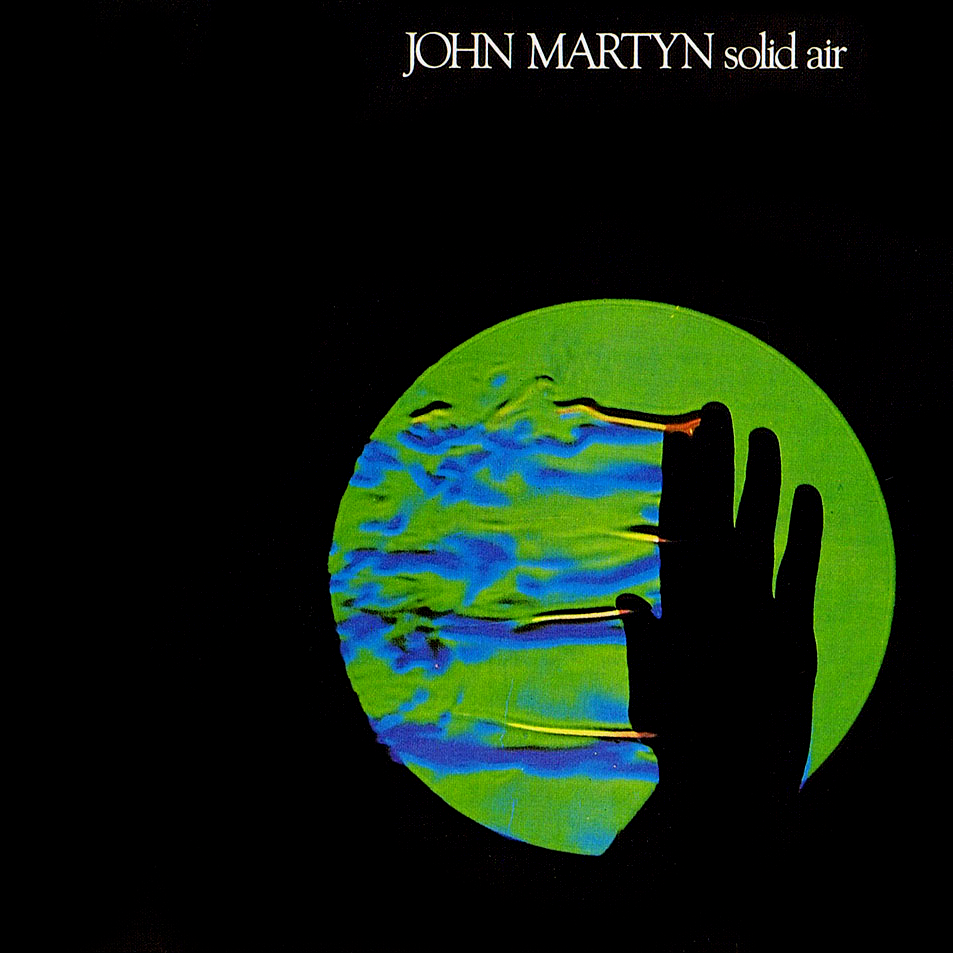
Inspiration can come from everywhere! I've noticed that a few of my photographs look visually similar to the cover of Solid Air by John Martyn. My dad had this album in his vinyl collection and I used to enjoy getting all the gate folds out and looking at the artwork on them.


I searched for the artist who made this iconic art but to no avail. I did, however, find out the technique used to capture the image; Schlieren photography, a form of Shadowgraph photography. I would love to try this form of photography some time.


This photo was taken last week as part of my experimentations with a few classmates. When I saw this photo later on, I was instantly reminded of solid air. Was this unconsious inspiration or just chance?


This is a photo I took almost a year ago now, not only does it make me think of multi dimensional beings communicating with us but it also features a hand silhouette. Funnily enough, quite a few people have likened this photo to Solid Air also.

Tuesday, 27 January 2015

Experimentation 20.01-26.01


Yesterday I set up a crude little make-shift studio in one of my college's store cupboards. I had a little white strip of paper between two shelves. Occasionally people would come into this very cramped room to fetch something (in the dark), they would ususally look at me a bit funny.

My Suitcase scale studio! Note the art materials overflowing from the shelf above.
Using a lens, I was able to focus the light coming through the triangular apertures in the lasercut card onto my paper backdrop / projection screen.


And then I experimented further..


I even filmed some bits using a tripod. I quite enjoy projecting onto my body, later on in the week I experimented with dancing and full body movement in front of projections.

A gif I made of projecting onto my hand.

The next day, my class had self directed study. I'd left my projector and lenses and kit in college so I got some classmates involved! We had an entire classroom to utilise this time and so the projection was on a larger, more human scale;


Myself dancing in front of the projector and Lena interacting with the shadows of my fingers. This had quite a theatrical, performative feeling. Like multi dimensional shadow puppets.
Multi-layered Hand dancing along to music. I'd love to choreograph some kind of light performance/dance along to music. Or to maybe even make a music video based on these premises!
We used cellophane as colour gels to tint the projector light and experimented with focus, distance and perspective. In the end, we had about five people dancing in the shifting light whose shadows interacted on a 2D plane, it was really fun! I have a video of it which I will upload at some point.

A few days later, on my birthday, we had another self directed study. So what did we do? We had another light show of course! This time, I found an overhead projector, which is designed to focus anything on its surface, perfect!

Using the overhead projector and my (possibly stolen) green man sign.

We learnt as much as we had fun, which is the beauty of experimentation.